Showing posts with label spain. Show all posts

Thursday, 14 July 2011

Day Trips From Madrid

Lake at Aranjuez
Staying in any city for more than a few days can be feet achingly tiring, the chance of seeing a bit of greenery and open space out of the city is an attractive option. It also allows you to discover more of the region your staying in and adds an additional authentic experience to your stay, wherever you are. Madrid is located in the very centre of Spain on the Castilian plateau, it is in the region of the Comunidad de Madrid which is one of the seventeen autonomous regions of Spain. Madrid is is connected by several train stations, Atocha in the south of the city and Chamartín in the north. From these stations it is possible to take the the local train service (Cercanias) to a number of destinations, see the Renfe (Spanish train service) website for timetables http://www.renfe.com/EN/viajeros/index.html. Here's a selection of the best day trips from Madrid.

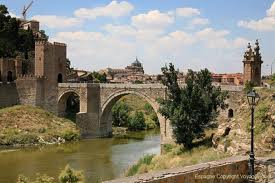
Toledo's Alcantara bridge

Toledo
View of Toledo
Toledo is a UNESCO World Heritage site, the old Toledo is made of of labyrinthine medieval streets and is encircled by the river Tagus on three sides. In the summer months, Toledo can be busy with tourists especially at the weekends, however it makes for a great day trip as it only 35mins on the train from Madrid. The must sees while your there are the Cathedral and the Alcázar of Toledo, a castle which is now a museum.


Aranjuez 
Not far from Toledo is Aranjuez, which used to be the place where the Spanish royalty spent there summers. It is renown for it beautiful gardens which are a popular setting for wedding photos. Like Toledo it can be busy with tourists who come to admire the Royal palace and gardens. It is truly a magical and beautiful place to visit and to just wander. Travel time from Madrid is approximately 45 minutes.

Gardens at Aranjuez

El Escorial 
Library at El Escorial 
North-west of Madrid is the town of San Lorenzo de El Escorial. It is the location of  a rather austere monastery built by Felipe II and finished in 1584 after twenty years of construction. The huge granite building is an awe-inspiring site from the outside and its interior is decorated with frescoes and paintings by Velázquez, Titian and El Greco among others. El Escorial is a real step back in time, Felipe II's bedroom has been preserved in the same condition as when he died in 1598. El Escorial can be reached by bus from Moncloa bus station (bus 661) or from Atocha or Chamartín train stations, the journey takes about an hour.

El Escorial

Alcala de Henares
Palacio de Laredo
Famous as the birthplace of Cervantes, Alcala de Henares is a medieval university town 35 km North-east of  from Madrid. The old town has been largely preserved and it is made up of winding cobbled streets. The centre has also been listed as a UNESCO World Heritage Site. The town is famous for its population of white storks that nest on top of many of the historial buildings, they have themselves become quite a tourist attraction. A must see is the Palacio de Laredo which is an eye-catching building due to its mix of architectural styles (Gothic, Mudejar and Arabesque). Alcala is well connected to Madrid and has become a commuter town as its on 25minutes journey by train.

Alcala de Henares Plaza Cervantes
Segovia
Segovia is situated to the north-west of Madrid in the region of Castile y Leon. Segovia is an enchanting city famous for the Roman aqueduct that was built c. AD 50. Segovia has be declared a world heritage site by UNESCO and has a abundance of historical buildings of civic and religious relevance. Some must sees include the 16th century Gothic Cathedral in the Plaza Mayor and the Alcázar de Segovia, which is a 14th century fortress of Roman origin. To see something more modern, the Contemporary Art Museum houses the work by the Abstract Expresssionist Esteban Vincente in a Renaissance style palace. Train journey from Madrid is about 30 minutes. 


Alcázar Segovia
Aqueduct Segovia

Saturday, 25 June 2011

Something more refreshing.....Sangría Blanca


We are used to, and perhaps a bit bored of drinking Sangria made with red wine. However, Sangría Blanca (white sangria) is a much more refreshing adaptation of the original, and is the suitable option for those hot afternoons that lead on to long summer evenings. It can be topped up with more or less alcohol as you like or as the evening progresses. This recipe uses among other things Vodka, if you wish to make a softer version the Vodka can be left out altogether. But do try at least a splash of sherry as it really brings out all the flavours.


To make a jug of Sangria you will need:

1 bottle of dry white wine
50ml of Vodka or dry sherry such as a Fino (or both, just add a bit more soda)
2 limes halved
2 lemons halved plus a few extra wegdes
1 small bunch of white grapes de-seeded and halved
a selection of chopped fruit such as peaches, strawberries or oranges
a few sprigs of mint
club soda or lemonade
ice

To prepare the Sangría, pour the wine and Vodka/sherry into a jug. Juice the limes and lemons and add the juice to the jug. Add the all the fruit, lemon wedges, ice and mint, then stir. Top up with the soda or lemonade.


Adaptations: as with the original, there are many possible ways to adapt this recipe; different spirits could be used such as gin or tequila. Also, if you haven't got fresh mint, then a splash of mint liqueur is a good replacement. The fruit used can also be adapted to what's available to  you.

Tip: this recipe is a great way to use up any white wine of a lesser quality, although a medium priced white wine is the preferred option.

Monday, 20 June 2011

It's getting too hot, time to go up North: La Rioja

Church in a small village of La Rioja
The wine region of la Rioja has become more widely known around the world in recent years, firstly for the quality red wine that it produces and secondly as a travel destination. The types of visitor the region of La Rioja pulls is mainly Spanish, being fairly near Madrid, it makes it an ideal getaway. However, it is beginning to emulate the atmosphere of St Emilion as a centre for wine appreciation. Its stylish and modern hotels and its mix of new world wine making and traditional methods has brought in a new kinds of visitors eager to discover the its historical heritage and admire the striking landscapes. While also indulging in tours and tasting in the many wineries that are spread over the region.


Many of the vineyards cover the region and cross over to the Basque country. Many of the grapes used by individual wineries are taken from different areas of La Rioja and the Basque country. The capital of the region is the untouristy  Logroño, this is the main commercial centre but also has a old historic Centre lined with tapas bars.
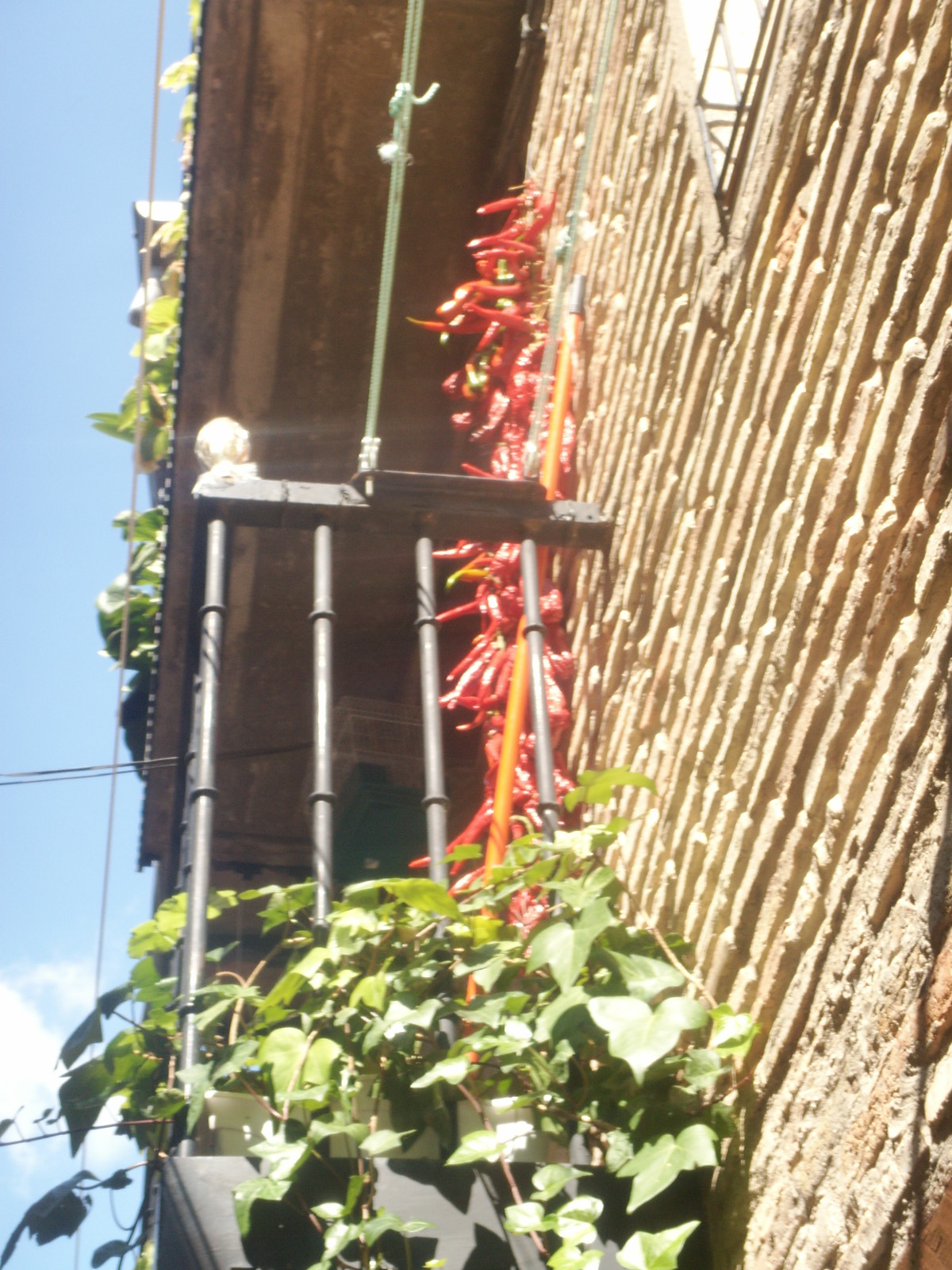
Chillis hanging ou to dry

Main tapas street in Logroño


The tapas are cheap and delicious, typically served are pinchos which are marinated meat skewers, stuffed piquillo peppers, Riojan cheeses and sweet paprika chorizo. There is also a great local fiesta in September, the streets are full with people eating and drinking. The local wines are of course on offer, as are other wines from around Spain. One of the most delicious wines I tried was a young white wine from the region, at only 0.70cents a glass!  What's also also appealing about Logroño is that there is none of that wine snobbery that you find in areas like Bordeaux. Any bartender is happy to advise and suggest wines that will be more than reasonable in price.


Right: stuffed piquillo pepper, left; pinchos (Before)

(After)
Another big wine producing town is Haro, which is home to both the Muga and the Cune wineries. Tours of the wineries cost between 6 and 10 euros, and free wine tasting is included. Muga actually gives each visitor a wine tasting glass as a present.

Grapes being processed

Huge wine vats
 Its worth doing one or two tours to see the inside workings of the wineries and the different methods that are used. The history of the wineries are also explained and some of their origins are quite interesting. If you can get a glimpse of the the growers wine book, this provides plenty of interesting information of the wine harvests, some even date back till the 18th century.

In the Muga wine cellar

The countryside around Haro is stunning. Camping is a good option in La rioja and there is an excellent campsite situated right between  the town and the Muga winery in Haro. Don't miss the wine festival in August when everyone throws copious amounts of wine over each other.

In the north of La Rioja towards the Basque country there are stunning mountain and valleys. There are actually seven main rivers that run through the region making it very green and fertile. There are even Vultures to be seen on the mountain tops as well as old red-stoned villages along the way.

Countryside around La Rioja


Logroño has an airport and there are flights from London and connecting flights from Madrid. Alternatively, you could hire a car from Madrid and take a tour up to La Rioja, its about two hours away from Madrid and worth the drive. Online car hires are the cheapest in Spain, check out amigosautos.com or pepecar.com
Abandoned village house

 enjoyinspain-melissa.blogspot.com

Sunday, 12 June 2011

El Teide Spain's Highest Mountain

This is a time-lapse video of el Teide, Spain's highest mountain in Tenerife. It is such a great video accompanied by beautiful music by Ludovico Einaudi - "Nuvole bianche", you have to have a look.


enjoyingspain-melissa.blogspot.com

Saturday, 11 June 2011

Montanejos A Hidden Gem

Main pool at Montanejos

Behind the mountains near Valencia, the spa village of Montanejos is beset by pine covered mountains. Its natural swimming baths are filled with natural mineral water pouring straight from the mountain, you can swim and drink the cool clean water which flows down into several different pools.


In the hot summer months Montanejos is a cool refreshing change to the costas and it is popular with Spanish holiday makers who seem to prefer the fresh mineral water rather than the salty Mediterranean sea. Although popular,  it does not every seem overcrowded and it is also an established base for mountain sports.

Abuelas enjoying the tranquillity


There is not much to the town itself although the main square has some nice reasonable bars and places to eat serving typical lunches. There are also a few little shops selling local products like honey.

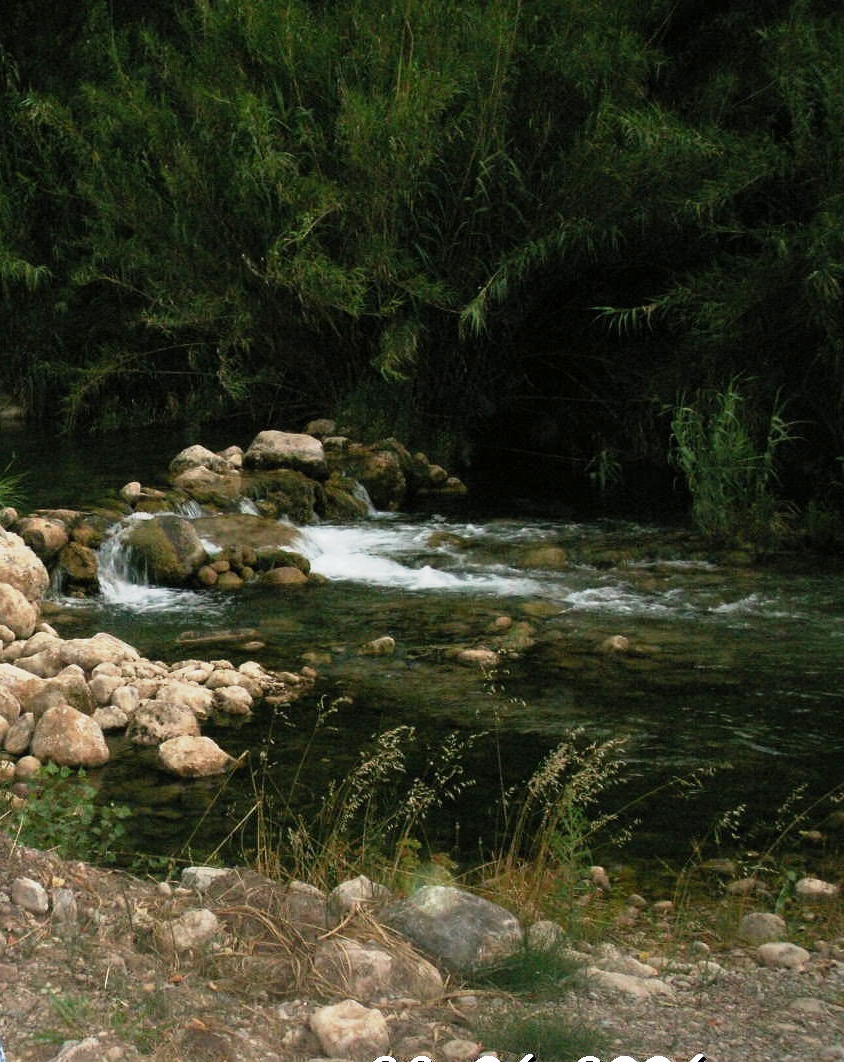
River running through the valley


Its a stunning journey to get to Montanejos from Castellón on the CV20. The road takes you through the Río Mijares gorges all the way up to Montanejos that lies in the very centre of the Sierra de Espadán.


View of the old town


Most of the hotels are open only in the summer as it get quite cold up there in the winter. There is also a pension called Refugio de Escaladores. If you've got a camper there is plenty of place to park up. There is also a free camping that has barbecue facilities and running water near Cirat on the way to Montanejos on the CV20.

Bridge at the bottom of the town
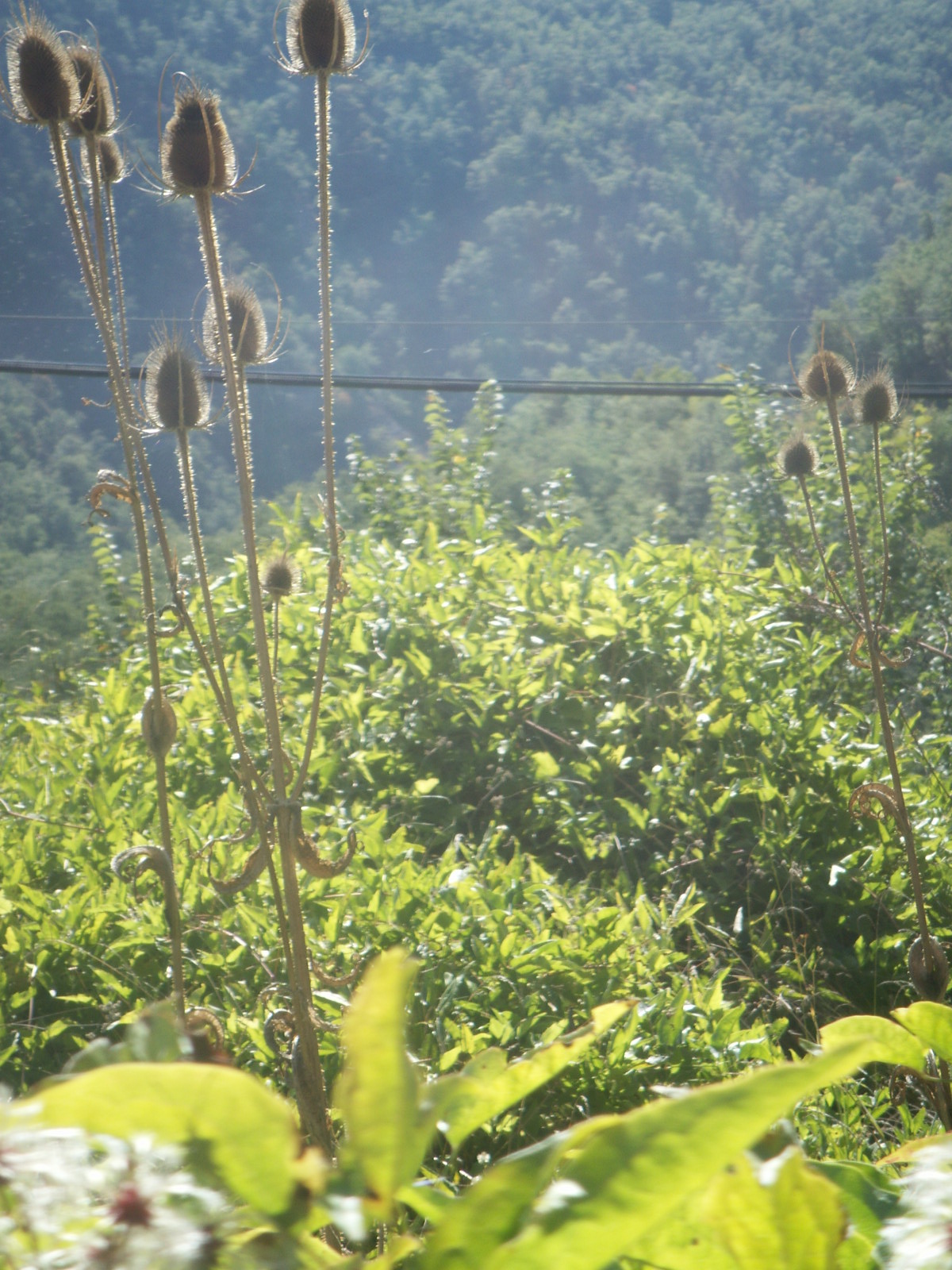
Some thistles growing wild

Tuesday, 7 June 2011

Brisk guide to Santiago de Compostela

Narrow street of the old town
The cathedral  was built between 1075 and1211


View of Santiago  


Santiago de Compostela is a beautiful city located in the north-west of Spain in the region of Galicia. It is famously known for the religious pilgrimage called the 'Camino de Santiago de Compostela'. However, if you don't fancy walking from the Pyrenees there is an airport with regular flights from Stansted with Ryanair or a regular train service from Madrid, which makes Santiago a great destination for a getaway break.
                                                     
Morning light on the cathedral
The compact old town, which is almost completely pedestrianised  is primarily focused around the cathedral, the cathedral being the main draw for many tourists. The cathedral can get very busy at times so if you want to contemplate the cathedral's Romanesque architecture without the bustle or the cues get there extra early to watch the sun come up over the towers, it makes for a spectacular sight and a impressive start to the day.
Archways surrounding the cathedral walls

 Strolling around the cathedral takes you through a series of narrow streets and squares filled with bars and restaurants. Following the cathedral walls around the city brings you to a several different convents and monasteries. If you're getting hungry you can try the typical dish of the region, which is octopus or 'pulpo al gallega'. This is boiled octopus served on potatoes with paprika and olive oil.                                                                                   
Typical bar offering a 'good octopus' 

View of the cathedral from the park
Dove house in the park
If you have not had enough of the cathedral yet you can get some stunning views of it from the park Alameda which is between the old town and the university, it also offers great views of the rest of the city. The park is the former lands of the counts of Altamira, and it was given to the council in the 19th century. The park was designed taking into account the three social classes of that time, there is three walks taking into account each social class. 
Alameda park

Alameda Park

Old facade of the university

 If you're looking for somewhere to stay there are plenty of reasonable priced guest houses called 'pensiones' available to accommodate the pilgrims. On the other end, there is the Parador situated right next to the cathedral called Hotel Hostel dos Reis Catolicos. This luxury hotel is considered to be one of the oldest hotels in the world. For something different contact the university for their summer accommodation information. They have rooms with bathrooms available during summertime with a good quality cafeteria and bar downstairs offering varied and cheap food.


The city as a whole offers more than the end to a religious pilgrimage, it has an abundance of seafood restaurants with local fresh fish and seafood brought in daily from Coruna to be washed down with the local white wine, Albariño. Its rich architecture is best observed wandering from plaza to plaza without the aid of a map. During the summer there is often some event or other taking place adding a festive feel to city.

The market 


Saturday, 28 May 2011

FIB 2011, Benicássim Festival, some tips.


Another FIB festival coming up in July from the 14th to the 15. Then main line ups are The Streets, The Strokes and Artic Monkeys although the main highlights for me will be Portishead and The Stranglers. Now if you've never been before there are some things to watch out for, including where to camp, the heat and getting there and back.
In the festival (main stage)
 Firstly, here's a brief introduction to the area and what you can expect. Benicássim in a small coastal town in the region of Valencia. It's mainly a Spanish resort town with long sandy beaches and some historic 19th century villas that line the promenade. Thankfully, it isn't a high-rise nightmare that you'd find further down the coast towards Benidorm! The town itself is made up of small businesses that are geared up for the summer tourist trade. There's plenty of restaurants and bars to eat at and I'd recommend eating in the town rather than in the festival or the beach where the prices can be inflated. I have been to Benicassim a week after the festival and seen the prices reduced greatly, so if you're on a budget be aware!

Benicassim town

Board advertising the menú
Here's a general price guide of what you can expect to pay. Obviously, the beach front restaurants are going to charge more although you can find reasonably priced menus. Look out for the 'Menu del dia' which is a set menu at lunch time where you can chose a starter and main course followed by a dessert for a set price, a drink in usually included and you can expect to pay between 7 to 12 euros.  Alternatively, some bars offer a single plate of paella for example for about 5-6 euros. In Spain the a la carte menu is called 'la carta' and here you can order tapas or 'raciones' which are larger portions of tapas. Drinks are usually cheaper than in the UK, and a cheap and refreshing Sangria ot Tinto de verano can be ordered in jugs to be shared with friends.

Drink isn't allowed to be taken into the festival, and they will search you so be aware. One of the cheapest places to buy drink is Lidel which has been very popular with the festival goers as a bottle of vodka last year cost 3.95euros!


Camping- If you've been before you'll know that the camping is basic, the video above that I found on youtube, gives you an idea of what it's like. Last year there was a more expensive option that had better facilities. However, be prepared for the 'free' camping areas which look like they are only used once a year for this festival. The camping site nearer the festival seems a bit better, as the camping near the town is quite a distance although there is a bus service. Let's hope the conditions have improved this year as the showers were few and freezing, and there was always queues of about 30-40 minutes waiting time. It's also very cramped with no lighting at night, so make sure you bring a torch.  If it all gets to much as it did for us last year, there are several camping sites not connected with the festival that have great facilities. We went to Bonterra camping for a day and night which wasn't expensive, but it gave us a chance to shower, rest and have a good swim in the pool, which was great and as day-time during the festival is quite lazy it gave us a chance to re-charge without missing anything.

The beach at Benicassim
July is incedibly hot so make sure you're prepared. If you forget anything or haven't got room to bring alot there is a cheap budget shop in the town that sells everything called a 'chino', it's run by Chinese and you can get sun shades to shampoo.
                                                                             Camping out by the beach

The local train service runs frequently from Valencia, although they cheekily double the price of the tickets around the time of the festival. The train service is called 'Cercanias' and is easy to find in the Valencia Nord train station. The service runs from Valencia to Castellón, and the journey takes about an hour.
Area behind Benicassim
If you get a chance to leave the festival sites during the day there are some amazing beauty spots behind in the mountains with fresh water that will give you a chance to cool off! There is an area behind Benicassim called 'Desierto de las Palmas' and 'Montenejos' which is slightly further away but worth the visit. If you haven't got a car, the local aqua park is quite popular.